Five ways to support multilingual learners with technology
EAL
How can schools personalise learning for multilingual learners using technology - without adding to teacher workload or separating students from their peers?
1. Effective PedTech starts with pedagogy, not the platform
One of the strongest themes throughout the webinar was that technology should never drive the strategy. Learning goals come first.
As Ruth Radwan, Group Head of Multilingualism at ISP explained, schools need to begin by asking:
What are the goals of education?
What do we believe about learners and learning?
What is the role of the teacher?
What is knowledge and how do learners access it?
What barriers may prevent access to learning?
How do we ensure progress in academic language development?
ISP’s Learning.First approach means that it views the most effective PedTech tools as the ones that help teachers to create inclusive, personalised learning experiences. In terms of Multilingualism, this is achieved by supporting access to learning through scaffolding complex content, facilitating translanguaging and by accelerating the development of academic language skills.
Technology should support high-quality learning experiences, not replace them. EAL technology that’s designed well gives teachers time back – reducing the administrative load so they can focus on the high-quality interactions that move learners forward.
2. Personalised learning should not mean isolation
A strong message from the panel was that multilingual learners should not be separated from their peers in the name of “personalisation.”
Instead, technology should act as a bridge to classroom participation.
Gemma Donovan, Regional Head of Multilingualism at ISP – Middle East, spoke about moving away from the idea that support tools belong only in interventions outside the classroom. Instead, ISP schools are using PedTech to help students access the same rich curriculum as their peers, with the right scaffolds and support in place.
The result is a more inclusive classroom experience where students’ home languages are celebrated as assets and not obstacles.
3. Small, consistent learning moments matter
One particularly interesting insight came from Hamilton International School’s action research project exploring the impact of daily PedTech use with Arabic-speaking learners.
Rather than lengthy intervention sessions, students used technology in short daily bursts:
10–15 minutes per day
4–5 times a week
focused on targeted language development
Even over a relatively short timeframe, staff saw measurable improvements in:
learner confidence
classroom participation
independent learning habits
English language proficiency
Consistent learning often matters more than intensity.
4. Data matters – but so does formative assessment
The panel also discussed how schools can measure whether a PedTech tool is genuinely making an impact.
Importantly, they stressed that engagement metrics alone are not enough. Ruth highlighted the importance of schools analysing observational, perception and numerical data such as:
learning visit observations
student and parent feedback
assessment outcomes
to “triangulate” evidence and build a more complete picture of learner progress when using various tools.
The balance between quantitative data and real learner experience was a major theme throughout the webinar.
5. Parent and carer engagement is important to success
One of the most practical sections of the conversation focused on parent partnerships.
The schools involved have found that multilingual learner progress accelerates when families:
understand why the technology is being used
can see learner progress regularly
feel confident supporting learning at home
Coffee mornings, multilingual family sessions, regular reporting and home access to learning platforms all helped strengthen engagement.
A phrase that stood out from the discussion was:
“Screen value over screen time.”
The emphasis wasn’t on simply increasing technology use, but on ensuring that screen time led to tangible learning progress.
Watch the webinar on-demand
This only touches on five key elements of the discussion. The webinar also explored:
what defines high-impact PedTech
how schools can pilot new platforms successfully
strategies for staff buy-in
using multilingualism as a learner asset
building sustainable implementation across school groups
If you work with multilingual learners and want practical insights on how to harness technology like FlashAcademy® from international school leaders, be sure to catch up on the webinar.
PedTech (or pedagogical technology) is the practice of putting pedagogy at the centre of any digital technology used within education. It focuses on why and how technology supports learning rather than the technology itself.
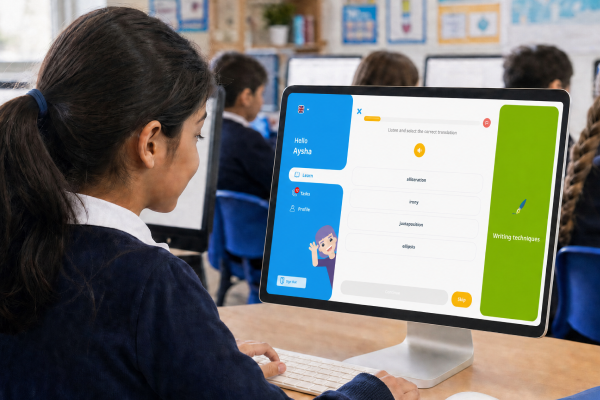
Technology like FlashAcademy® can support multilingual learners through translation tools, vocabulary support, speech-to-text features, personalised practice activities and multilingual content. When used effectively, it can improve learner confidence, engagement and access to the curriculum.
Schools should combine assessment data, classroom observations, learner feedback, and parent feedback to build a full picture of impact.
Schools personalise learning for multilingual learners by adapting resources, scaffolding language, using multilingual supports, assessing language proficiency regularly, and providing targeted interventions based on learner needs.