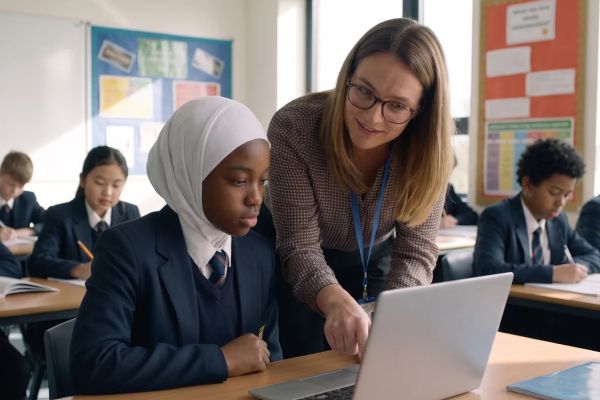
In many international schools, multilingualism is no longer the exception; it is the everyday reality of our classrooms. Students arrive carrying languages, cultures, identities and experiences from around the world. Rather than viewing language diversity as a challenge to overcome, we have an opportunity to see it as a strength that enriches learning for everyone.
As a Head of EAL working in an international primary setting, I have had the privilege of supporting students from a wide range of linguistic backgrounds. Our learners come with different levels of English proficiency, different educational experiences and different relationships with language learning. Some students confidently communicate in multiple languages, while others are beginning their English journey.
Through this work, I have learned that multilingual learners do not need to leave their home language at the classroom door. In fact, the opposite is true. Their first language often becomes the bridge that helps them access learning, build confidence and develop English more successfully.
Why home language matters for EAL learners
One of the biggest misconceptions around multilingual learners is that using English only will accelerate progress. In reality, home language plays an essential role in cognitive development, identity and academic success.
When students are encouraged to use their first language, they often demonstrate deeper understanding and stronger engagement. Home language supports comprehension, helps students process new concepts and provides emotional security, particularly for learners who are new to English.
As a multilingual educator myself, I understand how language shapes identity. Language is not simply a communication tool; it carries family stories, traditions, values and belonging.
I have seen students become more willing to participate when they realise their home language is respected rather than hidden. A child who was initially quiet may begin sharing ideas through translation, visuals or peer support. Gradually, confidence grows and English develops alongside that sense of belonging.
Multilingualism is not a limitation. It is an asset.
Our school community reflects a rich mix of cultures and languages. Students speak a variety of home languages including Chinese dialects, Korean, Japanese, Arabic, Tamil, Hindi, Bahasa Malaysia and many others. This diversity creates exciting opportunities for learning.
Within our EAL provision, we work closely with classroom teachers to ensure language support becomes part of everyday learning rather than existing separately from it.
Some of the ways multilingualism is celebrated in our school include:
- Visible language representation
We aim to make languages visible throughout learning spaces. Classroom displays may include multilingual vocabulary, translated labels, visual supports, and student contributions in different languages.
This simple change sends an important message: “Your language belongs here.”
- Cultural and language sharing
Students are often encouraged to share experiences connected to their culture, festivals, traditions, or home countries. These moments help multilingual learners become experts in the classroom rather than always being learners. It shifts perspectives from support needs to strengths.
In our school, we actively create opportunities to celebrate linguistic and cultural diversity through whole-school events and initiatives.
One example is our Diversity Awareness Assembly, where students are given opportunities to showcase their cultures, languages, traditions, clothing, celebrations, and personal experiences. These assemblies help build understanding across year groups and encourage students to appreciate the different backgrounds represented within our school community.
We also recognise International Mother Language Day, using it as an opportunity to celebrate the many languages spoken by our learners. Students may share greetings, stories, vocabulary, songs, or cultural experiences linked to their home language. This reinforces the message that multilingualism is valued and that every language has an important place within our learning environment.
Another important initiative is our Celebration of Success events. While academic achievement remains important, we also celebrate progress in language development, confidence, participation, resilience, and independence. For multilingual learners, success may look different at different stages of their journey. A student speaking confidently in class for the first time, presenting in English, or taking greater ownership of learning can be equally meaningful milestones.
These experiences help foster belonging, increase confidence, and create a school culture where students feel proud of both their identities and their languages.
This approach reminds learners that multilingualism is not something to overcome; it is something to celebrate.
How EAL collaboration supports inclusive learning
Our EAL support works through a combination of withdrawal sessions, classroom support, targeted intervention, and collaboration with teachers.
Rather than focusing only on English acquisition, we also look at:
- Confidence
- Participation
- Independence
- Social relationships
- Academic access
The aim is not simply for students to “learn English” but to thrive as learners.
Practical strategies for creating inclusive classrooms for EAL learners
Supporting multilingual learners does not always require major changes. Small, intentional strategies can have a significant impact.
Here are some approaches that have worked successfully in our setting.
Students often understand concepts before they can express them in English.
Allowing learners to discuss ideas in their home language, annotate texts bilingually, or translate key vocabulary can reduce cognitive load.
Examples include:
- creating bilingual word banks
- labelling diagrams in two languages
- using translation tools appropriately
- pair discussions using shared languages
- building vocabulary glossaries
The goal is not dependence on translation but using it as a scaffold.
Visual supports and language scaffolding
Multilingual learners benefit enormously from visual input.
In EAL lessons, we regularly use:
- images
- graphic organisers
- sentence frames
- vocabulary mats
- gestures
- colour coding
Sequencing activities for better understanding
Visual support helps learners access content while developing language simultaneously.
For example, in science lessons, introducing diagrams before written explanations often increases understanding and participation.
Pre-teaching vocabulary
Vocabulary is one of the biggest barriers for multilingual learners. Often students understand the concept but struggle because of unfamiliar terminology. Pre-teaching key words before classroom lessons gives students a head start.
This may involve:
- introducing topic vocabulary
- exploring meanings visually
- practising pronunciation
- linking words to first languages
- creating examples together
Students enter lessons with greater confidence because the language feels familiar.
Using technology to support EAL learners
Technology has become an important part of language support. Platforms such as translation tools, interactive vocabulary applications, and language programmes such as FlashAcademy® can help reinforce learning independently.
We have found digital tools especially useful for:
- vocabulary development
- listening practice
- independent revision
- reading support
- home learning
Technology does not replace teacher interaction, but it provides additional pathways for access and practice.
Creating an inclusive classroom culture
Inclusion goes beyond academic support. Many multilingual learners are navigating new environments, friendships, expectations and cultural transitions at the same time.
Simple actions matter:
- learning correct pronunciation of names
- pairing students thoughtfully
- encouraging peer support
- celebrating effort
- providing wait time
- valuing multiple ways to participate
Belonging often comes before confidence. And confidence frequently comes before language.
The impact of inclusive classrooms on multilingual learners
One of the most rewarding parts of working in EAL is seeing transformation over time.
Sometimes progress appears academically, such as a student who once relied completely on visuals beginning to independently writeparagraphs.
Other times progress is quieter:
- A learner raises their hand for the first time
- A student joins a discussion
- Someone speaks confidently to a peer during break time.
These moments matter.
I have worked with students who initially entered school speaking very little English. Through targeted support, classroom collaboration and consistent scaffolding, they gradually developed confidence to participate, ask questions and take ownership of learning.
Many of these students eventually required reduced support because they had built independence. Their progress was not only measured by language scores but by confidence, relationships and identity.
Multilingual learners often carry incredible resilience. When supported appropriately, they flourish.
Challenges and opportunities in supporting multilingual learners
Despite progress, supporting multilingual learners remains complex.
One challenge is balancing the wide range of languages represented in schools. Unlike settings with one dominant home language, international environments may include many languages within a single class.
This means support needs to remain flexible.
Another challenge is helping educators move away from deficit thinking. Students who are learning English are sometimes viewed through what they cannot yet do. Instead, we need to recognise everything they already bring:
- existing languages
- prior knowledge
- cultural understanding
- problem-solving skills
- adaptability
There is also ongoing work around ensuring EAL support remains collaborative. The most effective provision happens when classroom teachers, EAL specialists, support staff and families work together.
Language development should not sit with one department alone. It belongs to the whole school.
Looking forward: Celebrating language diversity in schools
As educators, our responsibility is not simply to teach English. It is to create spaces where multilingual learners feel seen, valued and successful.
My aspiration for our learners is that they continue to develop confidence in both their English and their home languages. I hope they never feel they must choose one identity over another.
Multilingualism is powerful.
It allows students to connect worlds, navigate cultures and think in different ways. In our classrooms, every language represents a story. When we celebrate those stories, we create learning communities where all students can belong.
And perhaps that is one of the most important lessons multilingual education teaches us: language diversity is not something we accommodate. It is something we celebrate.
About the author
Sharmilla Narkiran is an experienced EAL educator and Head of EAL at HELP International School, Malaysia, specialising in supporting multilingual learners in mainstream classrooms.
With a background in language acquisition, inclusive pedagogy and culturally responsive teaching, she works with teachers to develop practical strategies that remove language barriers and empower multilingual students academically and socially. Her work draws on translanguaging, scaffolding, vocabulary development and identity-affirming practices that recognise students’ home languages and cultures as strengths.
Sharmilla is passionate about bridging research and classroom practice, equipping teachers with realistic, sustainable approaches for everyday teaching.
To hear more from Sharmilla on practical tips for multilingual classrooms, check out the webinar Practical classroom strategies for multilingual learners.