Gamification in language learning: Does it work for multilingual learners?
- EAL
Explore how gamification in language learning can support engagement, confidence and English language acquisition for multilingual learners.
Inside this report, you’ll discover:
- how gamification connects to second language acquisition research
- where gamified language learning is most effective for EAL learners
- how schools are using gamification to support English language development
Download the report to discover practical insights into gamified EAL learning and multilingual learner support.
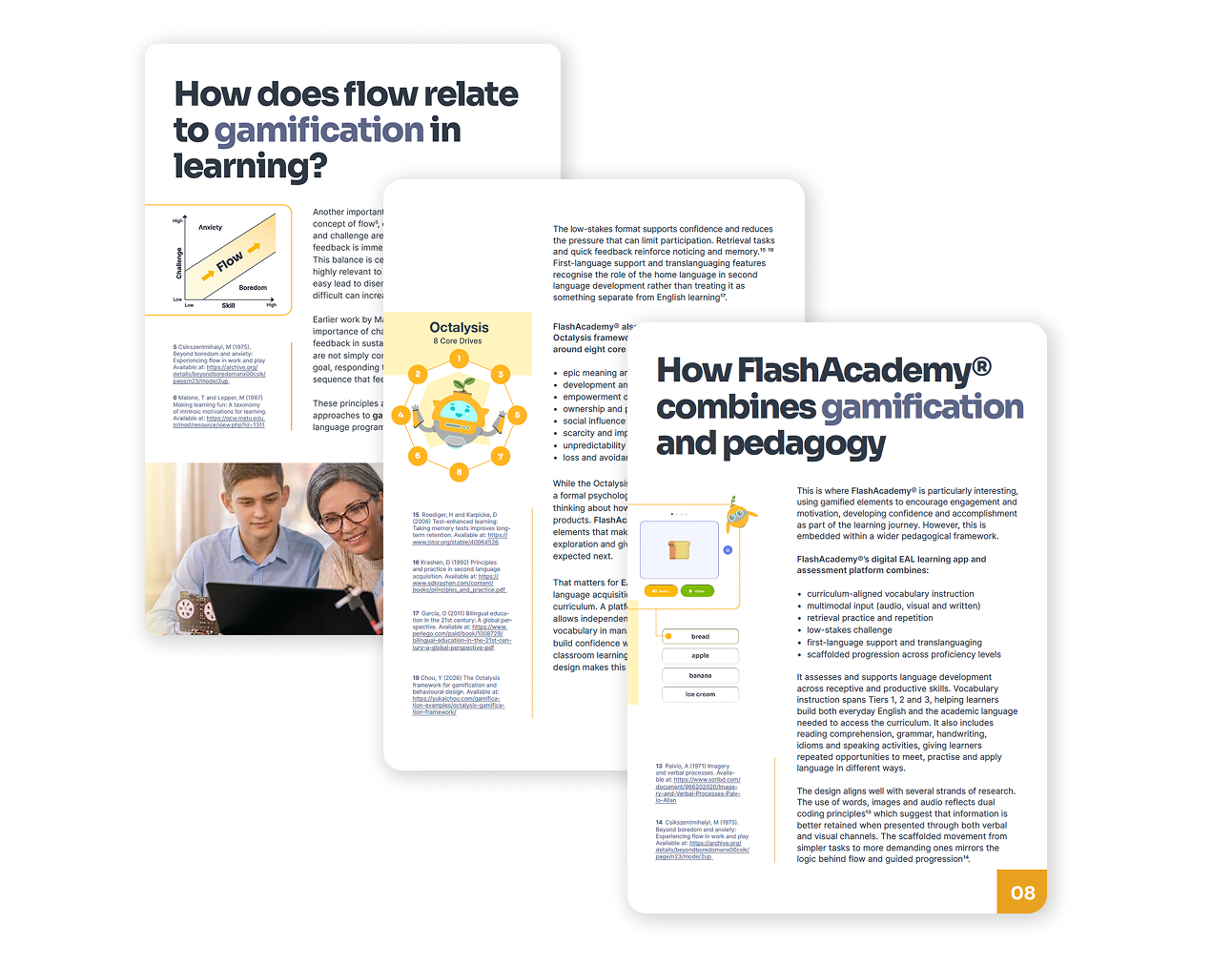
Why schools are rethinking gamification in language learning
Gamification in language learning has become increasingly common across digital learning platforms, particularly within EAL provision. Features such as rewards, progression, challenges and feedback are often used to encourage participation and sustained learner engagement.
However, as schools continue investing in digital language learning, leaders are asking a more important question: does gamification meaningfully support language acquisition for multilingual learners?
This report explores how gamification relates to learner motivation, second language acquisition and long-term English language development in schools.
What research says about gamified language learning
Interest in gamified learning has grown rapidly in recent years, alongside wider conversations around learner engagement, confidence and motivation.
This report examines the research behind gamification in language learning, including:
- motivation and self-determination theory
- flow theory and learner engagement
- second language acquisition research
- retrieval practice and repetition
- multilingual learning and translanguaging
It also explores how these principles apply within EAL settings and what schools should consider when evaluating gamified language learning approaches.
Gamification and English language development
While gamification can support participation and engagement, schools also need to consider how digital learning platforms contribute to meaningful English language development.
The report explores:
- where gamification can support multilingual learners most effectively
- the limitations of gamified learning approaches
- how engagement connects to pedagogy and language acquisition
- what effective EAL provision should include beyond motivation alone
How FlashAcademy® applies these principles
The report also examines how FlashAcademy® combines gamification with language acquisition principles to support multilingual learners through a structured, curriculum-informed English language learning app.
Download the report to explore the research, practical considerations and pedagogical approaches shaping gamified EAL learning in schools.
Frequently asked questions
Gamification in language learning uses game-like features such as rewards, challenges, progress tracking and feedback to encourage learner participation and consistent practice. In EAL settings, gamification is often used to support engagement, confidence and repeated exposure to English.
Gamification can support language acquisition when it is combined with evidence-informed teaching approaches and clear language learning goals. While gamified learning may increase motivation and participation, effective English language development also depends on factors such as meaningful interaction, repetition and structured progression.
Gamified language learning can help multilingual learners by encouraging regular practice, reducing anxiety around mistakes and increasing engagement with English language activities. Many schools use gamified EAL platforms to support vocabulary development, independent learning and learner confidence.
Gamification can be effective for EAL learners when it is designed around established principles of second language acquisition. The most effective approaches combine engagement strategies with curriculum-aligned language learning, retrieval practice and scaffolded support.
Schools evaluating gamified EAL platforms should consider how well a platform supports meaningful language development. Important factors may include curriculum alignment, multilingual support, scaffolded progression, assessment opportunities and evidence-informed pedagogy.