Virtual schools: Closing the language gap for UASC learners
- ESOL
Support better outcomes for UASC learners by strengthening continuity across disrupted and fragmented provision.
Inside this report, you’ll find:
- the role of language development in effective planning
- some of the common barriers facing continuity and progress
- what a stronger and more consistent approach can look like
Download the report for practical insights to improve support for UASC learners.
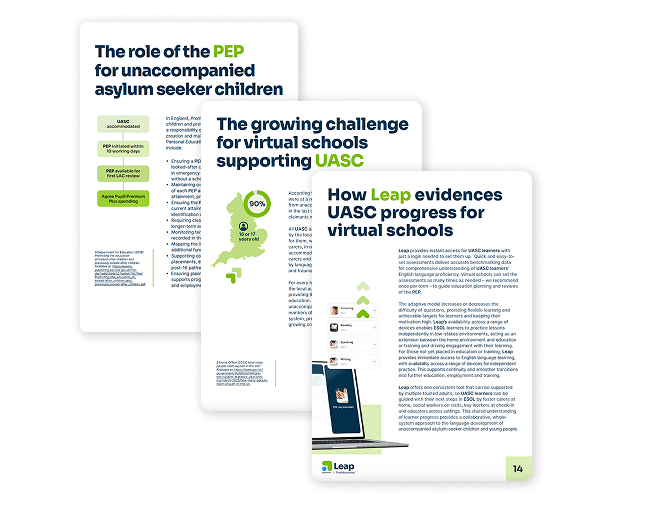
About this insight report
Virtual schools play a central role in promoting the educational achievement of unaccompanied asylum-seeking children (UASC). Many UASC learners arrive with interrupted education, limited English proficiency and complex care arrangements, making it harder to sustain progress, maintain continuity and evidence impact through the Personal Education Plan (PEP) process.
This insight report explores how virtual schools can strengthen support for UASC learners through more consistent English language provision and a clearer approach to progress, continuity and educational planning.
Why language continuity matters for UASC learners
For many unaccompanied asylum-seeking children, educational progress is shaped by late arrival, interrupted education, language acquisition and complex care arrangements. The report highlights how transitions between placements, providers and post-16 pathways can disrupt language development at exactly the point sustained support is most needed.
English language proficiency underpins access to the curriculum, participation in new settings, confidence in daily interactions and readiness for next steps. Without continuity, support can become fragmented across homes, schools, colleges and professionals, making progress harder to sustain over time.
The role of language provision in the PEP process
For UASC learners, language development is central to effective planning.
The report explains why the PEP should reflect both educational and language support, particularly where learners are moving between placements, providers and post-16 pathways.
Why transitions create additional risk for UASC learners
Transitions are a recurring challenge for UASC learners. Delays in school placement, movement between care arrangements, changes in educational provision and progression into post-16 routes can all interrupt language development and make it harder to build momentum.
The report also considers the challenges of maintaining continuity where formal records may be limited or provision varies across settings.
Trauma, language acquisition and educational judgement
The report highlights the importance of understanding how trauma, interrupted education and early-stage language acquisition can affect how progress is perceived.
For virtual schools and partner professionals, this means regular review, informed interpretation and a flexible approach to support are essential. A clearer view of language development helps reduce the risk of underestimation and supports more accurate planning for each learner.
How consistent ESOL support can strengthen outcomes
The report shows why consistent English language provision matters not only for immediate access to education, but also for longer-term progression. For many older arrivals, post-16 outcomes are closely linked to English language development, with English for Speakers of Other Languages (ESOL) support playing an important role in access to further education, employment and greater independence.
Providing support that continues across transitions can help learners build confidence, maintain momentum and develop the language needed for participation and progression.
Who this report is for
This report is designed for:
- virtual school heads
- virtual school teams
- local authority professionals
- designated teachers
- social workers and key workers involved in pathway planning
- professionals supporting looked-after and care experienced UASC learners
It is especially relevant for teams looking to strengthen continuity, evidence impact more clearly and keep language development central to educational planning.
Download the insight report
Download the report to explore how virtual schools can support continuity, strengthen English language provision and improve visibility of progress for UASC learners across placements, reviews and transitions.
Frequently asked questions
English language continuity helps UASC learners maintain progress across placements, education settings and post-16 transitions. Without it, support can become fragmented, making it harder to sustain development, evidence impact and plan next steps effectively
The report explores the challenges virtual schools face when supporting UASC learners, the role of language provision within the PEP process, the impact of transitions, and how consistent ESOL support can strengthen continuity and progress visibility
Language development plays an important role in curriculum access, participation and longer-term progression. For UASC learners, the PEP should include a clear plan for educational and language support that can be monitored and reviewed over time.
Transitions between care placements, education providers and post-16 routes can interrupt language development and reduce continuity of support. They can also make it more difficult for professionals to maintain a shared understanding of progress and next steps.
This report is designed for virtual schools, local authority teams and professionals supporting UASC learners who want to strengthen language continuity, improve progress visibility and support more positive long-term outcomes.
Yes. The report explores practical ways to support continuity through trackable language provision, shared visibility across professionals, and independent learning that can continue across placements and transitions.