In this guest blog, Catherine Alexander, EAL lead at St Matthew's RC High School looks at five ways schools can celebrate multilingualism and embrace the diversity of perspectives offered by EAL learners.
For more ideas to celebrate every learner in your setting, you can download our free resource below.
Like all educators working with multilingualism in the UK, I have faced huge challenges: an education system with limited funding and accountability, our current political climate and our incredibly busy roles. Despite these larger national barriers, I have found the role incredibly rewarding and am inspired by students and by colleagues, caring for, championing students and celebrating multilingualism.
Here are my recommendations for putting students first and having a positive outlook on what they can bring and what they can achieve:
1. Know your students
The basis of all high-quality teaching starts with knowing our students, understanding their learning needs and prior experiences. This is perhaps more challenging with new arrivals with limited English who are often missing prior educational records, but their situation makes them even more important. At St Matthew’s, we use FlashAcademy® because we’ve found their assessments offer low-stakes testing which provides us with an indication of the support needed. The AI-assisted assessments provide information about students’ levels in reading, writing, speaking and listening, with recommendations for colleagues about support needed, tailored to both their level of English and their language. This information helps us to better understand pupils’ home languages, current needs and support required.
Knowing who our pupils are and their situation is the foundation from which our celebration of their identities begins.
2. Track EAL proficiency progress
Once we have this data, it is important to track progress regularly. Introducing termly assessments with FlashAcademy® has provided us with key information about pupils, including identifying additional special educational needs and disabilities (SEND) and social, emotional and mental health (SEMH) needs, for those making progress more slowly than expected. AI-assisted marking has made this a far easier process for staff.
We use this data to decide on intervention groupings and priority pupils, so we can tailor support more purposefully. Tracking progress also allows us to celebrate our pupils and their fantastic efforts. We used our school SharePoint to centralise data so all colleagues could see this. We also uploaded this data onto Arbor. Mainstream subject assessments are often inaccessible to students who are newer to English, so continually tracking progress and celebrating linguistic development creates more equitable, encouraging and holistic assessments.
3. Encourage home language use
Maintaining a student’s home language also supports overall academic success, as literacy skills can transfer between languages. Research suggests we should allow pupils to work in home languages alongside English to better support understanding. With appropriate support, this facilitates high expectations, encouraging students to use their full linguistic toolkit to access lesson content. Prior knowledge is activated because we are leveraging the home language to connect new content to familiar concepts. This immersion of home languages into classroom practice allows a productive celebration of different languages, seeing it as an asset, not a disadvantage, nurturing a language-rich environment.
4. Celebrate students’ cultures and diversity
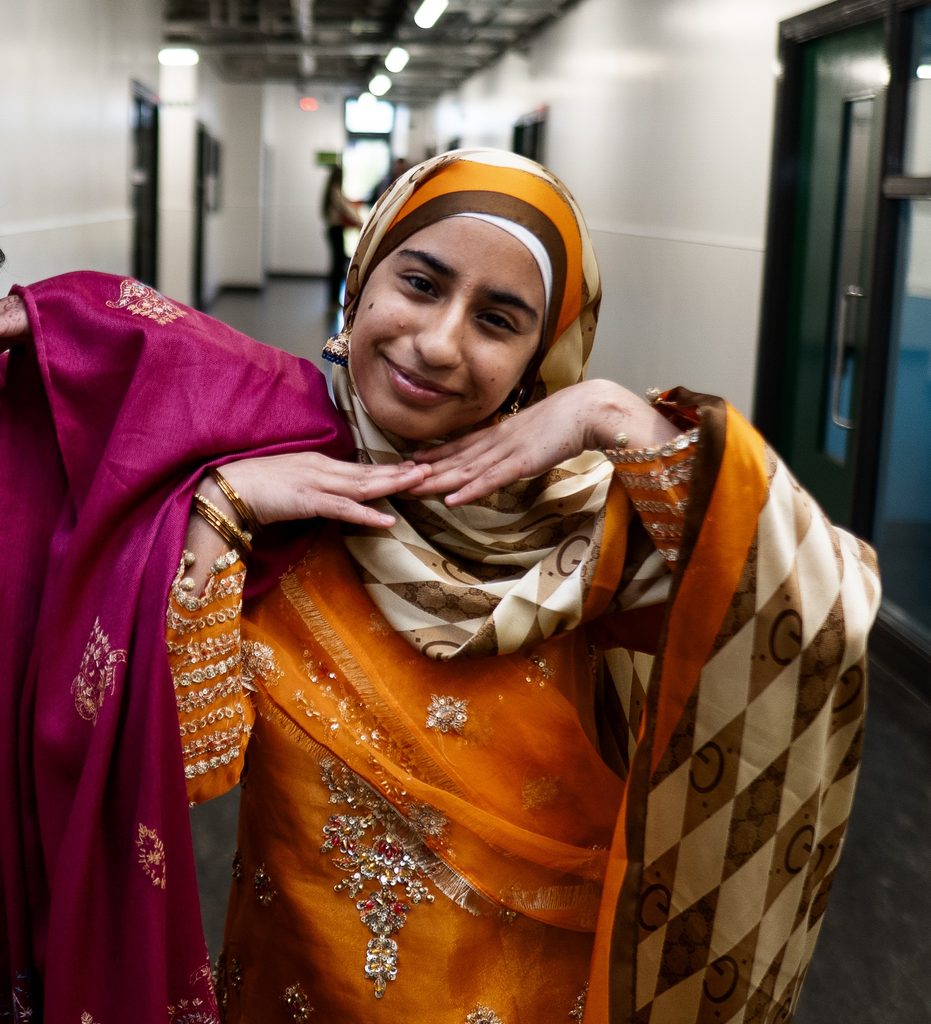
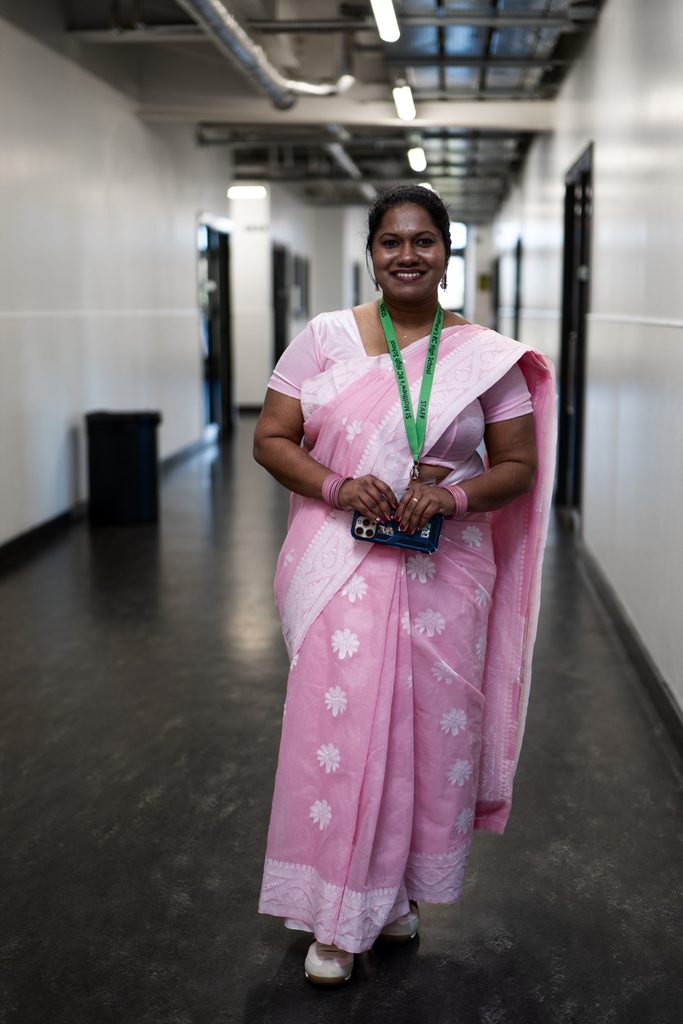
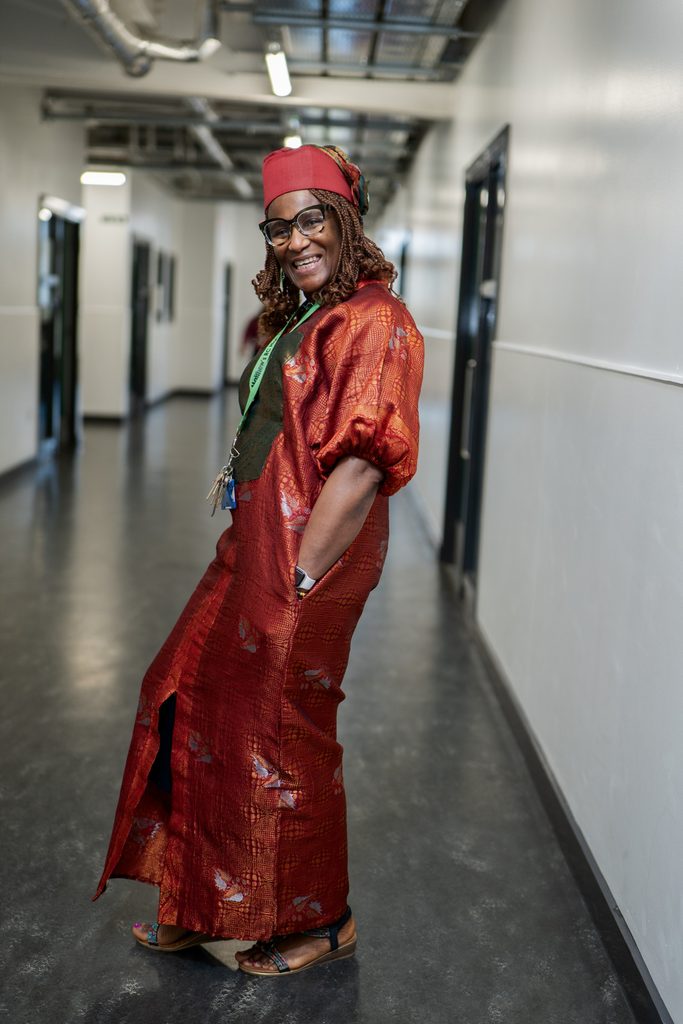
At St Matthew’s RC High School in Moston, we enjoy an annual celebration of our diverse, multicultural and multilingual community. This year it became a week-long celebration of events, culminating in a day of cultural dress with a much-anticipated fashion and dance show, which was broadcast to the whole school.
“Culture Day provides each person in the school community the ability to have their backgrounds and heritage celebrated. It provides students and teachers alike a safe space in which they can be their true, authentic selves. It is ultimately an event that induces anticipation and excitement throughout the academic year, and it never fails to put smiles on the faces of every boy and girl in our school.”
– Year 10 pupil, St Matthew’s RC High School
Cross-curricular activities to celebrate culture week included henna painting, prayer groups and music workshops. In a workshop led by a professional soul singer, who had been working with a group of pupils over the term, pupils composed a song which was performed on the day, on the balcony overlooking the canteen. Student leaders interviewed staff, who shared their different cultures. Our daily prayers were read in different languages, and prayer groups ran for different faiths.
All students were encouraged to wear their own clothes (though school uniform was also allowed) and we saw a beautiful array of multicoloured, multicultural outfits with students taking pride in their identity.
The event was student-led, organised by Year 10 student leaders, with the support of the assistant headteacher and safeguarding lead, who carefully checked the programme to ensure the day was positive. This included asking students not to wear flags outside of school, unfortunately this was a necessary consideration given the political climate locally.
The plan had been to avoid flags in general, but pupils appealed this decision, wanting to use flags to celebrate our diversity as a school community. Flags from all our different countries were ordered and displayed during the week in school.
As schools, it can be hard to make time for such events, with concerns about attendance and potential for negative responses and interactions. However the positives far outweigh the negatives, and it is worth making the time to show we care for and about all our pupils.
Student voice showed how pupils enjoyed the opportunity to learn about other cultures, but most of all the feeling of being seen:
“It makes students feel more confident about their heritage and ethnicity.”
“It allows students to embrace and celebrate diversity.”
“It creates a sense of understanding and unity within all cultures.”
“It represents our true identities and helps understand each other better.”
“It lets students understand cultures as they are and not as what everyone thinks they are.”
“It combats hidden stereotypes and prejudice by encouraging diversity.”
– Year 10 pupils
(Special thanks to Sam Oduniyi, St Matthew’s RC High School for the images)
Many said it is the highlight of their school year. It is time to celebrate diversity, culture and multilingualism and provide a safe space to do so.
5. Support social inclusion in school and beyond
Social language development is necessary for academic language development. The decision to allocate which groups pupils are in (ideally paired up with another pupil who speaks the same language if they are new to English) is transformative to pupils’ experience in school. Students develop their BICS more quickly than their CALP so their language acquisition journey relies on the development of social English first. Socialising with (and talking to) peers is fundamental to this journey and we can support this in classrooms and beyond, to celebrate diversity.
In an area with high levels of deprivation, many parents work in low-paid jobs where working hours don’t suit engagement with school, yet we find creative ways to overcome this. We are increasing our engagement with home, with a section on the school website providing information supporting multilingual learners and their families, including signposting to a range of resources from learning English language to social support. FlashAcademy® learner letters, translated into lots of different languages, have also been invaluable.
Integrating students’ cultural backgrounds into teaching creates a responsive, inclusive and engaging environment. Considering pupils’ social inclusion supports wellbeing, safety and a sense of belonging, all necessary to supporting and celebrating our multilingual learners.
Catherine Alexander is the Lead Teacher of English as an Additional Language (EAL) at St Matthew’s RC High School, Manchester, where nearly 500 EAL pupils speak 46 languages across the school. Catherine is passionate about creating a culture where every learner feels celebrated.