Breaking down the data: Making EAL progress measurable
- EAL
Make EAL progress more visible with clearer measurement, stronger use of data and more confident decision-making.
Inside this report, you’ll find:
- common barriers that make progress harder to interpret
- what a more consistent approach can look like in practice
- how leaders can strengthen their overall approach
Download the report to discover practical strategies for improving EAL outcomes.
About this insight report
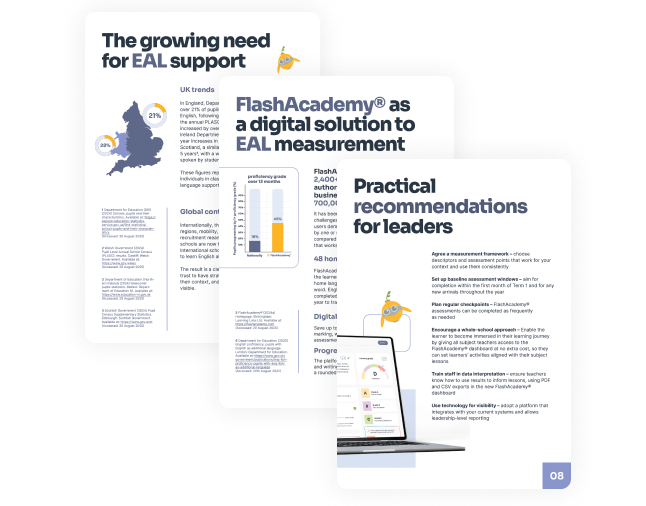
As the number of pupils learning through English as an additional language continues to grow, schools need clearer ways to understand progress and respond effectively. This insight report explores how schools, trusts and international groups can make EAL progress more visible through consistent frameworks, practical in-class processes and better use of data.
Grounded in sector trends and classroom realities, the report looks at why measurement matters, what makes progress visible over time, and how schools can use that insight to improve support for EAL learners and multilingual cohorts.
Why making EAL progress measurable matters
English as an Additional Language support is no longer a niche requirement. The report highlights growing demand for EAL and multilingual support across the UK and internationally, raising an important question for leaders: how can schools make progress more visible in a way that supports teaching, resourcing and intervention planning?
When progress is measurable, schools gain a clearer starting point for each learner, stronger evidence of development over time, better visibility of what is working and more confidence when sharing progress with parents, governors and leadership teams.
Common barriers to making progress visible
Many schools already collect useful information about learner development, but the report highlights several barriers that can make progress difficult to interpret consistently. These include variation in approach, limited visibility across teams or settings, and a lack of shared understanding around what meaningful progress looks like over time.
The report explores why these challenges matter and what leaders should consider when reviewing current practice.
Making progress more visible in practice
The report sets out practical ways schools can build measurement into everyday classroom life without creating unnecessary workload.
Rather than offering a one-size-fits-all, it helps leaders think about what meaningful, manageable and sustainable practice could look like in their own setting.
How schools and trusts can use data more effectively
For measurement to be useful, it needs to be visible, consistent and accessible. The report considers how schools and trusts can use learner information more effectively to support planning, improve oversight and make better-informed decisions over time
It also looks at the role technology can play in reducing administrative burden and improving access to clearer progress information. For leaders, this creates stronger foundations for planning support, allocating resources and reviewing the impact of provision over time.
Who this report is for
how to make EAL progress measurable. It is especially relevant for:
- EAL leads
- school leaders
- trust leaders
- inclusion leaders
- international school groups
- staff responsible for learner progress, provision planning and strategic support
Whether you are reviewing current practice or looking to strengthen consistency across multiple settings, the report offers a useful starting point for discussion and improvement.
Download the insight report
Download the report to explore how schools can make EAL progress more visible, use data more effectively, and build a stronger foundation for learner support, strategic planning and improved outcomes.
Frequently asked questions
Making EAL progress measurable helps schools build a clearer picture of learner development over time. It supports more informed decisions about provision, intervention, staffing and next steps, while giving leaders stronger evidence to guide planning and communicate progress clearly.
The report explores the growing need for EAL and multilingual support, why robust measurement matters, practical ways to embed measurement into everyday teaching, and how schools can use data more effectively to make learner progress more visible.
This report is designed for EAL leads, school leaders, trust leaders, inclusion leaders and international school groups that want to strengthen how they understand, review and respond to learner progress over time.
Schools can make progress more visible by using a consistent framework, creating a clear starting point for each learner, building in regular checkpoints, integrating measurement into classroom routines, and combining numerical data with professional insight from staff, pupils and families.
Yes. The report includes practical recommendations such as agreeing a consistent framework, setting up baseline windows, planning regular checkpoints, supporting a whole-school approach and improving how progress information is used across the setting.